
If you've been watching Colombia's numbers this year, you've probably noticed something interesting: production is climbing, but exports are down. That's not a contradiction; it's a story about currency, weather, and timing, and we want to walk you through what's actually happening on the ground.
The Production Picture
June was a strong month. Colombia produced 1.30 million bags, up 43% from the 909,000 bags produced in June 2025. That's a big jump. But zoom out to the full first half of the year and the picture shifts. Cumulative exports through the first semester reached 5.23 million bags, an 18% decline compared to the same period last year. The National Federation of Coffee Growers (FNC) still holds a strong 22.8% share of the country's total exports year to date, but the export slowdown is real and it's worth understanding why.
According to Germán Bahamón, general manager of the FNC, the biggest concern for coffee families right now isn't yield. It's the strength of the Colombian peso, and what that's doing to producer income and the country's export capacity.
A Strong Peso Is Squeezing Producers
Here's the mechanism, in plain terms. Colombia's exchange rate (TRM) hit a low of $3,205.87 COP per dollar recently. According to Bloomberg, the peso has appreciated 17% against the US dollar this year.
That sounds abstract until you follow the money. Every dollar a roaster pays for coffee is worth less in pesos once it lands in Colombia. Less money in pesos means less available for wages, fertilizer, and other inputs at origin. The math is stark: for every $100 COP shift in the exchange rate, the value of coffee exports moves by roughly $34 billion COP, assuming export volume stays flat.
On the ground, a carga (a load of 125 kg) is trading at $2,300,000 COP right now, and international prices continue to swing with global supply and demand and exchange rate movement layered on top.
What the Weather Is Telling Us
El Niño is back in the forecast. The latest climate bulletins show the Pacific Ocean warming sharply, up to 2.5°C above normal in the areas closest to the coast. Forecasters are putting near certainty (99%) on these conditions holding over the next few months, with a 98% probability they extend through March 2027. That points to a strong event.
As of July, Colombia's reservoirs are in healthy shape, and El Niño's onset is projected for October through December. So there's a window before conditions shift, and how growers use it matters.
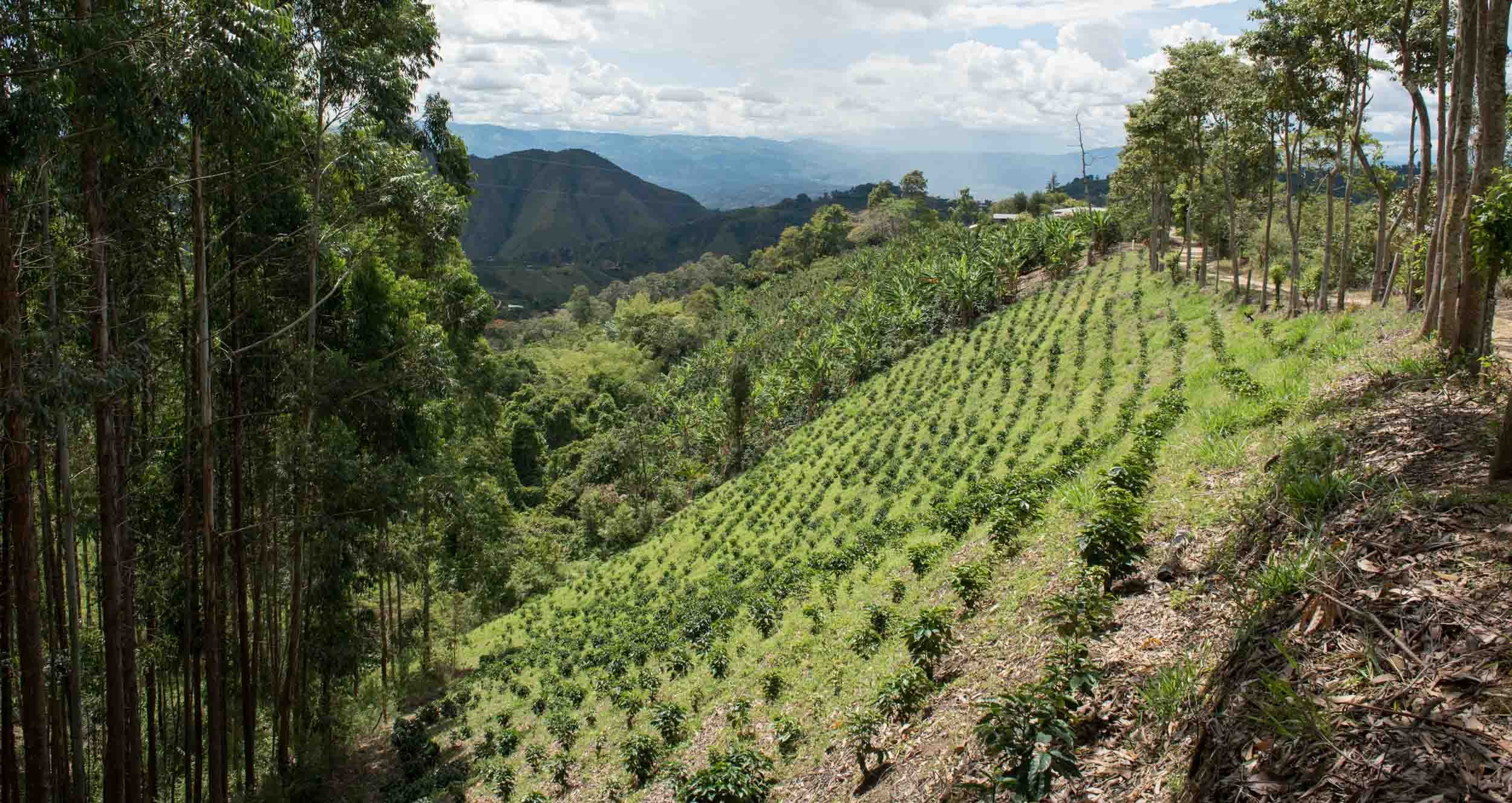
Here's how it's shaping up region by region:
Cauca (Popayán plateau): Currently in harvest, with good flowering pointing to a solid mitaca crop between November and January. The 2027 main crop is where El Niño's impact is expected to show up.
Huila: Some zones are seeing harvest peaks right now, and July through September is bringing good volume. But the outlook for late in the year is uncertain; producers and local organizations are expecting production drops near 30%. It's been an atypical season overall.
Southern Tolima: Coffee is still coming in, and August looks like a strong peak with excellent quality. Total volume for the year will land lower than usual, though there will still be coffee moving between October and December.
New Varieties on the Horizon
As part of its centennial, the FNC announced the launch of Umbral, a new variety bred for stronger resistance to leaf rust, the coffee berry borer, extreme weather, and certain plant diseases. Alongside that, the industry is rolling out Castillo 2.0, an improved variety developed by Cenicafé to provide producers with more reliable protection and higher yields.
Where Colombia's Coffee Actually Grows
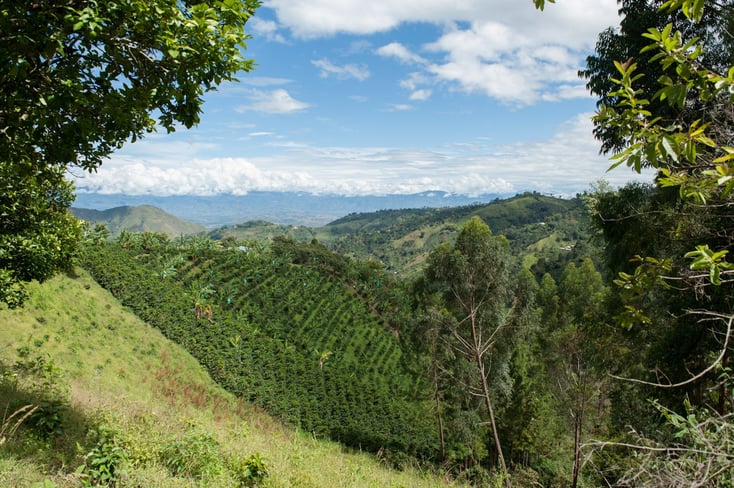
A useful reminder of where the country's coffee lands come from: Huila, Cauca, and Valle del Cauca together account for 35% of all coffee-planted hectares in Colombia.
Huila leads with 150,127 hectares, 23% of the national total. Add Cauca (93,567 hectares) and Valle del Cauca (50,308 hectares), and this southwestern region alone represents 294,002 hectares, or 35.29% of total national coffee area.
Nariño adds roughly 35,700 hectares on top of that, about 4.2 to 4.3% of the national coffee area on its own. That figure can shift slightly year to year with new plantings and renovations.
If you want to book some Colombia lots, make sure to reach out to your trader.

.png "SH Logo")