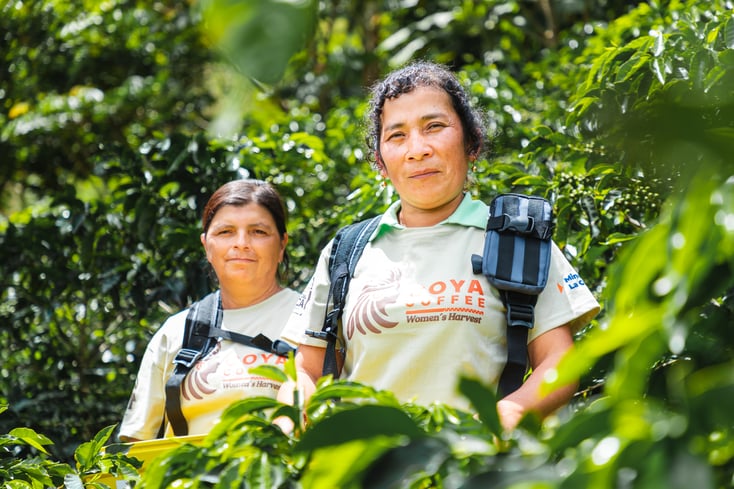
The Rutas del Inca Agrarian Cooperative is an organization of 300 small-holder farming families in Cajamarca, Peru, working together to bring distinct organic-certified coffee from their high-elevation microclimates to market.
While women in the region have always played a vital role in coffee production, leadership opportunities have not always followed. Since its founding in 2013, Rutas del Inca has worked to change that. In 2022, the women’s committee of Rutas del Inca set out to create a women-led coffee brand, turning that ambition into Coya Coffee Women’s Harvest.
We spoke with Carmen Elizabeth Castro Sánchez, one of the leaders representing the 64 women behind the project, about how their initiative began and the impact it's had on the whole cooperative.
________________________________________________
Sustainable Harvest (SH): Can you tell us a little about yourself? How long have you been a part of Rutas Del Inca?
Carmen Elizabeth Castro Sánchez (CECS): I have been a member since 2015. I am from the community of Santa Rosa de Querocotillo. I have two children and I am a coffee farmer by profession, inspired by my parents, who were also coffee farmers.
SH: We know that gender equity has always been important for Coop Rutas Del Inca. Can you tell us the story of how Coya Coffee Woman’s Harvest grew out of that commitment?
CECS: Coya Coffee was born within the cooperative, driven by our women’s committee. It was the members themselves who raised the need for a brand that would showcase the role of women throughout the entire coffee chain, from the farm to the cup.
The initiative was led by the women workers of the cooperative and received guidance from Root Capital, our partner, who believed in the project from the beginning. The name “Coya” comes from Quechua and referred to the woman of the highest station in Inca culture. For us, it represents the strength, dignity, and leadership of Andean women coffee producers.
.

SH: How does Coya Coffee change the opportunities and resources that are available to women producers within the coop?
CECS: Coya Coffee has generated three concrete changes for our members. First, access to differentiated markets where the gender component is valued and recognized with a fair price.
Second, capacity building through specialized training in agronomic management, quality control, wet processing, and cooperative management.
Third, economic autonomy, since the members directly manage the income generated from their coffee which translates into greater decision-making power within the household and the cooperative.
SH: Have you seen a difference in women’s role within the organization since the start of the initiative?
CECS: Yes, the change has been very noticeable. We have seen greater participation by members in assemblies, more women taking on leadership roles, and greater confidence in expressing opinions regarding technical and commercial decisions. Organization among the women has also strengthened through the women’s committee, where we share experiences and knowledge and support one another.
SH: How has Coya Coffee impacted the whole cooperative?
CECS: The cooperative has gained greater national and international visibility thanks to our participation in trade fairs and industry events. Coya Coffee has raised quality standards for all members, as the women have demonstrated very competitive cup profiles, creating healthy motivation within the cooperative.
SH: Can you tell us about your plans to roast and sell coffee locally in addition to exporting green coffee? Why is this important for you and your families?
CECS: For us, it is strategic not to depend solely on green coffee exports. By developing the roasted coffee line under the Coya Coffee brand, we also generate local employment opportunities for our families. It represents economic stability, and it also fills us with pride that consumers can enjoy the coffee we produce with such care on our farms in Cajamarca.
SH: Tell us about the coffee! Have you noticed anything distinctive about the coffee produced by the women of Coya Coffee?
CECS: Yes, there are characteristics that make it different. Since we work with small volumes, we are able to manage each lot with greater care at every stage: selective harvesting of cherries at peak ripeness, controlled wet processing, monitored fermentation, and slow drying. It is a coffee produced with dedication, and that can be perceived in the cup.
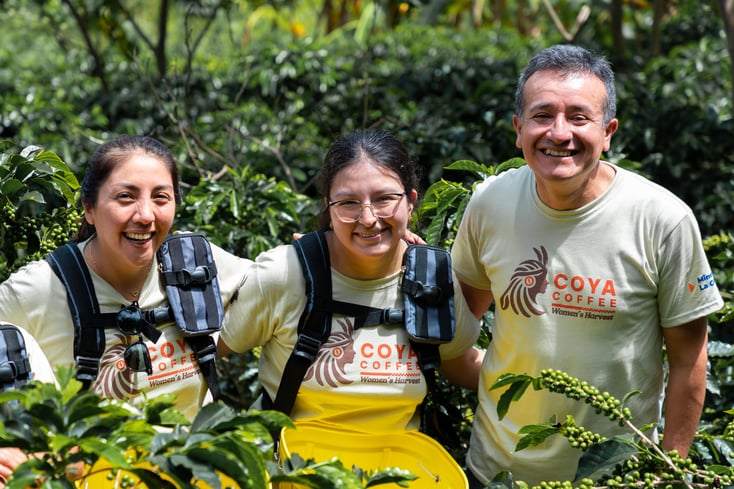
SH: We hear you are at a Mother’s Day Gathering today? Happy Mother’s Day! Can you tell us about the community of Coya Coffee and Rutas Del Inca?
CECS: Yes, we held a harvest discussion gathering where each woman shared her experience from the season. We also had technical training sessions, and the cooperative gave us a gift accompanied by recognition of each member’s individual effort. There was also an awards ceremony for outstanding members. These are spaces that strengthen the cooperative’s social fabric.
At Rutas del Inca and Coya Coffee, we constantly promote these kinds of gatherings, as well as joint social projects that benefit our communities.
SH: How does working with Sustainable Harvest in the relationship coffee model support the work you are doing through Coya Coffee?
CECS: The model has been key to our project beyond price alone. This model offers us market access, fair prices that recognize both quality and the social component, and ongoing technical support. For an initiative like Coya Coffee, which requires training, lot separation, and traceability, having a buyer committed for the long term is what makes the project sustainable. We feel that with SH, we are walking this path together.
SH: We understand that you are planning to provide opportunities for the daughters of members as part of the initiative. Can you tell us about the impact of this generational renewal effort?
CECS: We are concerned that many of our daughters are migrating to the cities because they do not find opportunities in the countryside. That is why, within the initiative, we are planning a cupping course specifically aimed at the daughters of our members.
We want them to develop technical skills in sensory evaluation, understand coffee quality standards, and discover that there are professional opportunities within the coffee value chain. Including the next generation in a meaningful way ensures the continuity of the project and helps form the future women leaders of the cooperative.
SH: Looking towards the future, what are your goals for Coya Coffee in the next few years?
CECS: Our goals for the coming years are to increase production volume under the Coya Coffee brand, position our coffee as an origin coffee with internationally recognized identity and traceability, increase roasted coffee sales in the domestic market, and consolidate the Coya Coffee brand as a benchmark for specialty coffee produced by women in Peru.
We aspire for Coya Coffee to become a recognized brand in both the domestic and international markets in the coming years, generating sustainable income for our families and making the entire cooperative proud.
__________________________________________
If you are interested in purchasing coffee from Coya Coffee Women’s Harvest, don’t hesitate to reach out! Get in touch with your Relationship Manager or email us at: trade@sustainableharvest.com.

.png "SH Logo")