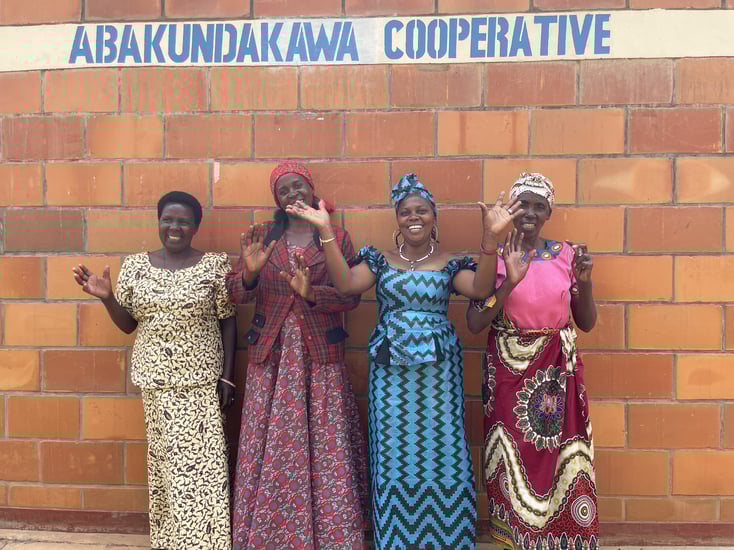
In Rwanda’s highlands, Abakundakawa has spent more than two decades building a cooperative rooted in quality, resilience, and community healing. Founded in 2004 by smallholder farmers seeking better market access and stronger prices, the cooperative has grown from 100 members to more than 2,000 producers today.
In this conversation, Antoine Kagenza, who has been with the group since nearly the beginning, shares how Abakundakawa evolved from its early challenges into a leader in certified organic coffee – and how becoming the first Regenerative Organic Certified® coffee producer in Rwanda marks the next chapter in its journey toward environmental stewardship, farmer wellbeing, and long-term partnerships.
________________________________________________
Sustainable Harvest (SH): Could you share the story of how Abakundakawa was founded and why the cooperative came together?
Antoine Kagenza (AK): Abakundakawa was founded in 2004, at a time when many smallholder farmers in our region struggled to access markets, especially specialty coffee markets. Farmers were producing coffee individually and had limited knowledge about how to reach international buyers or how to improve quality to meet specialty standards.
Because of these challenges, a group of farmers decided to join together to form a cooperative. The goal was to improve market access, strengthen coffee quality, and secure better and more stable prices.
In the beginning, the cooperative had around 100 members. Over the years, as farmers saw the benefits of working together – training, better prices, and stronger market connections – the cooperative continued to grow. Today, Abakundakawa has more than 2,000 members.
SH: Were there early challenges when the cooperative was getting started?
AK: Yes, the first major challenge was access to finance. At the beginning, the cooperative did not have enough capital. Members contributed small amounts of money, but it was not enough to run the operations or access larger markets.
We needed to take loans from banks, but we did not have collateral. The Rwandan government [began supporting] cooperatives by helping provide guarantees so we could access financing. The government also helped create the legal framework and training programs that allowed cooperatives like ours to grow and become more professional.
This support was very important in the early years.
SH: We know Abakundakawa works to support the co-op’s women producers through a women’s group called Hingakawa. Can you tell us more about Hingakawa?
AK: Hingakawa was created in the years following the Rwandan genocide. At that time, many women in our communities had lost their husbands, while others had husbands who were imprisoned. Because of this history, women often did not speak to one another and were separated socially.
Through the Hingakawa group, we created a space where women could come together, talk, and work side by side. Coffee became a way to support reconciliation. Women who had very different experiences began contributing together through coffee production and cooperative activities. Over time, Hingakawa became both a reconciliation initiative and a platform for women’s participation and empowerment within the cooperative.
Back in 2006, Hingakawa started out with just about 68 members. Today, the group has grown to 916 members representing 814 families. Hingakawa has become a well-known name in international markets, now producing over three containers of coffee each year.
SH: Abakundakawa has been a leader in certifications in Rwanda. What motivated the cooperative to pursue Organic and Fair Trade certification early on?
AK: Certifications help us access more markets and attract more buyers. Many buyers today require a certification, and certified coffees often receive premium prices. For the cooperative, certifications were a way to strengthen our market position, create trust with buyers, and improve income for farmers. That is why we became certified Organic and Fair Trade early in our journey.
SH: More recently, Abakundakawa became Regenerative Organic Certified® (ROC). Why did you decide to take this step?
AK: We saw the Regenerative Organic Certification as a natural next step. It helps us attract new buyers and new markets while reinforcing our commitment to environmental protection and long-term sustainability.
It is not only about protecting the environment. It is also about protecting people. Organic and regenerative practices reduce the use of harmful chemicals, which protect farmers, workers, and communities.
The certification includes many components: environmental protection, farmer support, worker protection, and soil health. It strengthens the sustainability of the cooperative and the future of our business.
SH: Was it difficult to achieve the Regenerative Organic certification? And did farmers need to change their farming practices to meet the regenerative organic standards?
AK: Because it was our first time going through the process, it was complicated. However, we were already Organic certified, and many regenerative practices were already part of what farmers were doing.
What we were missing was the certification itself. Now that we have gone through the process once, future audits will be easier, especially because organic and regenerative audits can be combined.
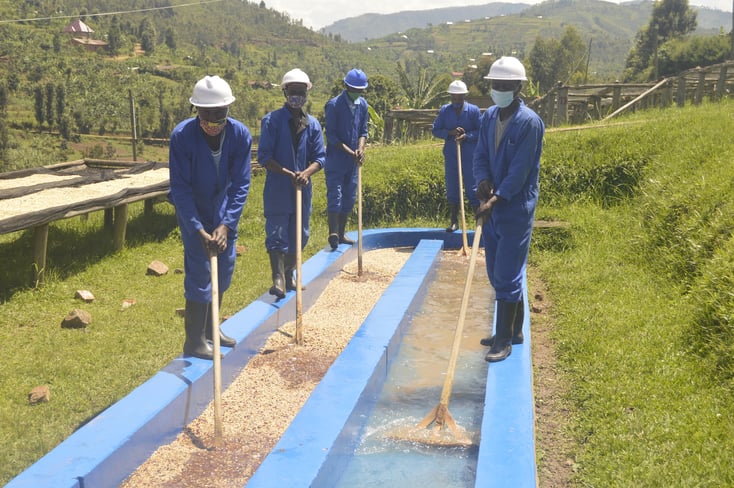
Our farmers receive continuous support from agronomists who work with them daily. We have three agronomists employed by the cooperative who train farmers and ensure good agricultural practices. Because of this strong connection, farmers were already well prepared.
SH: What impact do you hope the Regenerative Organic certification will have?
AK: We hope it will help us reach new buyers and strengthen relationships with existing partners. Certification builds trust and shows our commitment to sustainability and quality.
We also hope it will help us maintain long-term environmental health and protect the wellbeing of farmers and workers.
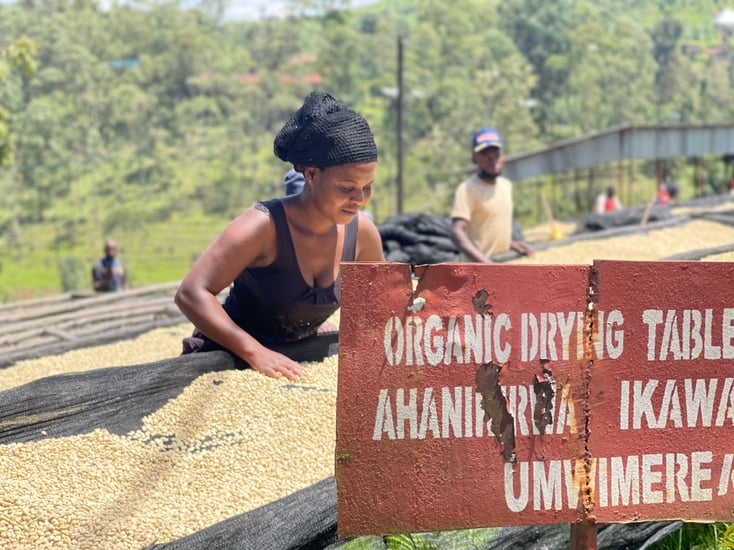
SH: How has your production grown over time?
AK: Last year we produced 12 containers, and this year we expect around 24 containers. Of this volume, about seven containers will be Regenerative Organic Certified.
This growth shows the progress of the cooperative and the increasing demand for our coffees.
SH: How have relationships with buyers evolved over time?
AK: Relationships grow step by step. A new buyer may start by purchasing a small volume, maybe 16 or 20 bags. Over time, as trust builds through quality, communication, and reliable shipping, those relationships grow.
For example, we have a roaster in the Netherlands who started purchasing in 2014 with a small volume. Today they buy much more. This shows how long-term partnerships develop.
SH: What does the future look like for Abakundakawa?
AK: We want to continue growing sustainably, expanding markets, and strengthening relationships with buyers. We are proud to be the first Regenerative Organic Certified coffee producer in Rwanda and East Africa, and we hope this leadership will open new opportunities for our farmers and our community.
__________________________________________
Reach out to your Relationship Coffee Manager to learn about our Abakundakawa offers, including coffee from the Hingakawa women's group!

.png "SH Logo")