.jpg?width=734&height=413&name=Nini%20Yorfady%20Castro%20(1).jpg)
In the remote coffee-growing communities of southern Tolima, Colombia, the Asociación de Productores Agropecuarios de Santa Rosa (ASPRASAR) was founded with a simple goal: to create opportunities for smallholder coffee families who had long been overlooked.
Since its founding in 2016, the association has grown into a close-knit network of 73 producer families committed to quality coffee and community development. Women play a central role in this work – not only as producers, but also as leaders shaping the organization’s future.
In this conversation, Nini Yorfadi, ASPRASAR’s General Manager and one of its founders, shares how the association began, the impact of its women’s committee, and the initiatives – from coffee training to future home garden projects – that are helping strengthen livelihoods in the region.
________________________________________________
Sustainable Harvest (SH): Nini, we know you've been part of the organization since its foundation. What can you tell us about the beginnings of ASPRASAR?
Nini Yorfadi (NY): ASPRASAR was founded on March 11, 2016, in a very remote area of southern Tolima, Colombia. It began with a small group of 18 producers from the Alto Saldaña region, near the community of Bilbao. These are communities that historically have had very little access to institutional support, so a group of producers decided to organize themselves and create their own association.
At first, the group was small, but in the first year, we grew quickly to nearly 100 members. Over time, we made some adjustments, especially related to certifications and production standards. Not all producers are able or willing to adapt to those changes, so today the association includes 73 producers, or as we like to see it, 73 families.
For us, it’s important to talk about families, because coffee is never produced by just one person. Behind every farm, there are spouses, sons, daughters and other family members who contribute to the work on the farm.
SH: We know women play an important role within the association. How is that group organized?
NY: Today, we have 30 women producers in the association. They are part of a group called MOKABYHS, which stands for Mujeres Caficultoras de Bilbao y Herrera (Women Coffee Producers of Bilbao and Herrera). The name reflects the two communities where we work.
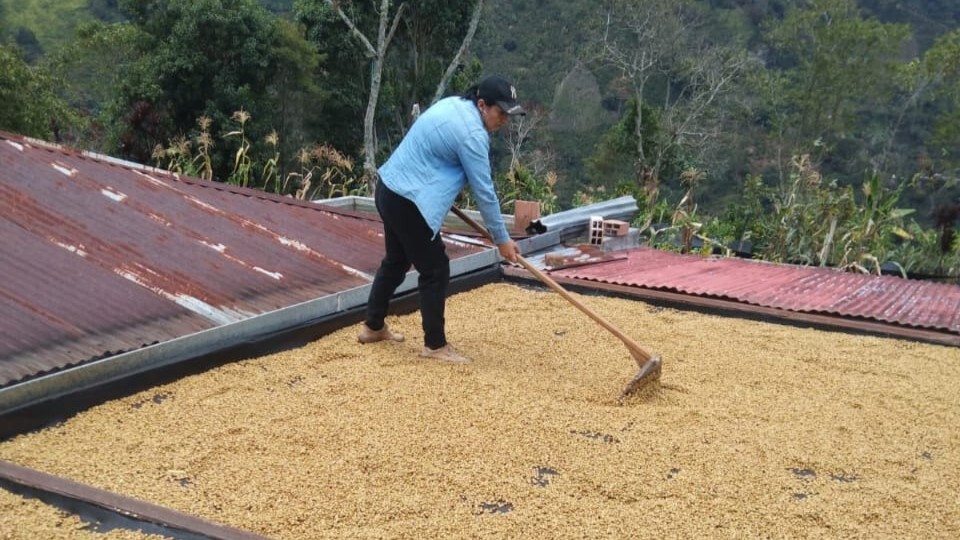
All of the women in the group are producers and manage their own farms. They are involved in the entire coffee process, from harvesting to processing. Within the organization, they also work with roasted and ground coffee sold locally under the registered brand MOKABYHS, managed by the women’s committee.
SH: Beyond production, what role do women play in the leadership of the organization?
NY: Women have a strong presence in the management of the association. I serve as General Manager, and I was also one of the founders of ASPRASAR. Before becoming manager, I served as the president of the organization.
Several administrative roles are also held by women. The president and secretary of the board are women, and we also have women working in certification implementation, administration, and field technical support. Even the role of fiscal oversight within the organization is held by a woman.
This has been very positive because women have shown a great deal of responsibility and commitment to the processes within the association.
SH: When was the women's committee created?
NY: The committee was formed about two years after the association was founded, around 2018. Since then, the number of women involved has remained quite stable.
Today, women contribute roughly 40% of the total coffee produced by the organization. Together they produce about 120,000 kilograms of parchment coffee per year, which is close to five containers.
SH: Have you noticed any differences in coffee produced by women?
NY: Yes, definitely. Women tend to be very dedicated and detail-oriented in their processes, and that often translates into quality.
During farm visits and audits we often find that farms managed by women have very well-organized production practices. That attention to detail shows up clearly in the final cup.
SH: What kinds of activities do you organize with the women's committee beyond coffee production?
NY: We work in several areas. On the production side, the women participated in a program called Negocios Verdes (Green Businesses), which focused on improving quality and sustainability. Through this program they received tools and equipment to strengthen their production processes.
We also hold the certification “Con Manos de Mujer” (With Women’s Hands), which highlights and recognizes the work of women producers.
Beyond production, we also organize training and community activities. We host gatherings where we work on leadership, participation, and personal development. Sometimes we invite professionals, including psychologists, to support the women with personal growth and well-being.
Many women initially feel shy about speaking in public or participating in leadership spaces, so we organize activities that help them build confidence and feel more comfortable sharing their voices.
SH: You also mentioned training around coffee itself. What kinds of trainings do you provide?
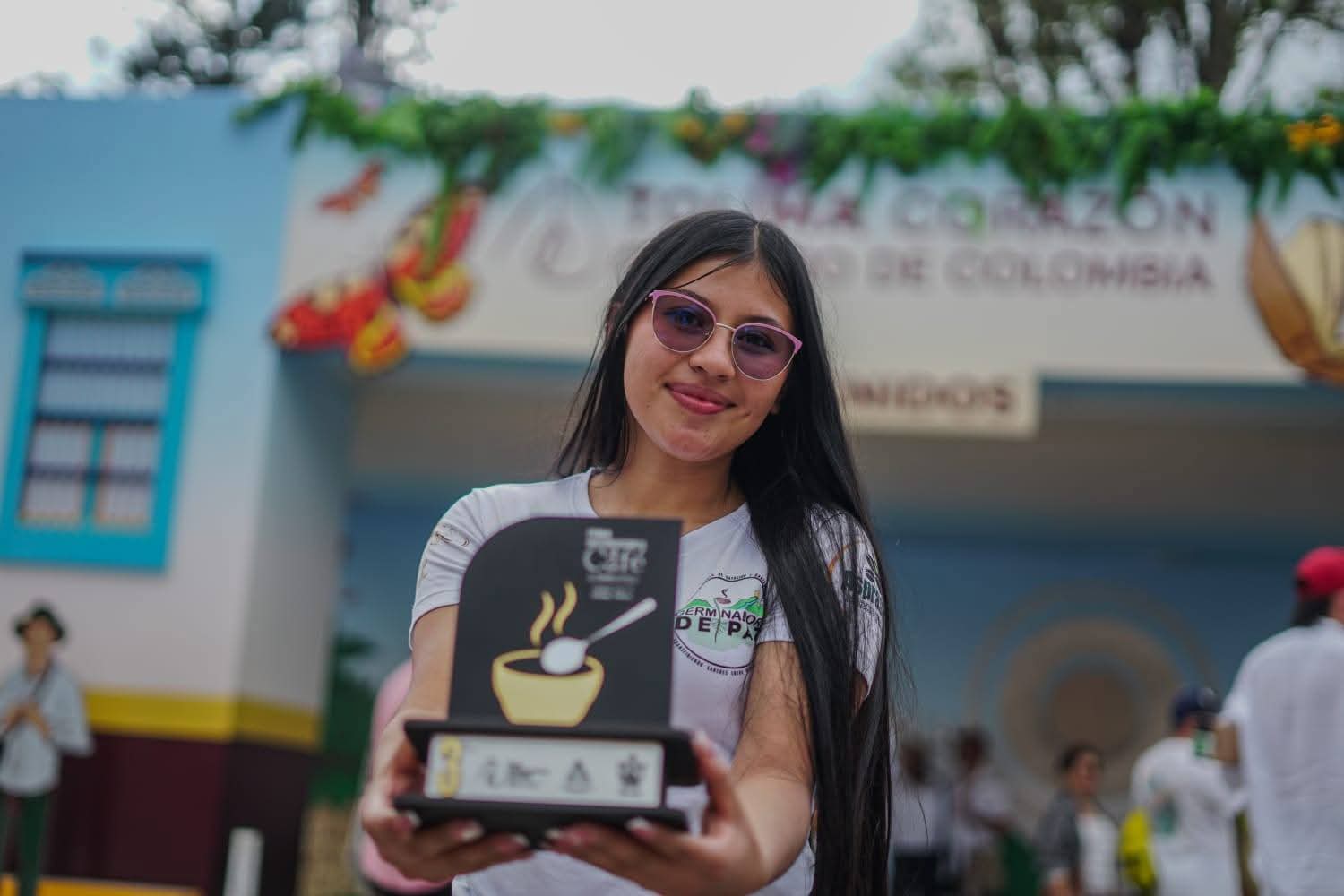
NY: Yes, we have promoted quality control and sensory training among the women. One of our producers has done especially well and was recently recognized among the top coffee tasters in Colombia in 2025.
We also created a special initiative for children called “Germinadores de Paz” (Seeds of Peace), which is a small coffee tasting school for young people in the community.
The name comes from the coffee process. When coffee seeds begin to sprout, the small plant is called a chapola. We see children as those first sprouts, the beginning of the future, so we wanted to use that idea.
Through this program we introduce children to coffee and have even taken them to participate in fairs and competitions. It has been a very beautiful experience for the community.
SH: You've also talked about developing a home garden project. Where did that idea come from?
NY: The idea comes from a very real need in our community. Even though we live in a very productive agricultural region, many basic foods still come from big cities like Bogotá.
When we organize local farmers’ markets, sometimes it’s difficult to find people bringing basic products like for example, tomatoes or onions. That made us realize how important it would be to grow more food locally.
That’s why we would love for each family, especially the women, to have a home garden. This could first help improve food security, but it could also create an additional source of income if those products are sold in local markets.
It’s a project we haven’t been able to implement yet, but it’s something we hope to develop in the future.
SH: Looking ahead, what are your hopes for the women's program?
NY: Our dream is to export containers of coffee produced entirely by women, and for that work to be recognized directly.
We would also like to see more women from the region join the association. Right now we have 30 women members, but there are many more producers in the area.
If we can continue strengthening this group and creating opportunities, we believe women’s leadership in coffee will continue to grow in our community.
__________________________________________
If you're interested in purchasing coffee from ASPRASAR or in supporting their home gardens project, don't hesitate to reach out! Send us an email at - trade@sustainableharvest.com

.png "SH Logo")