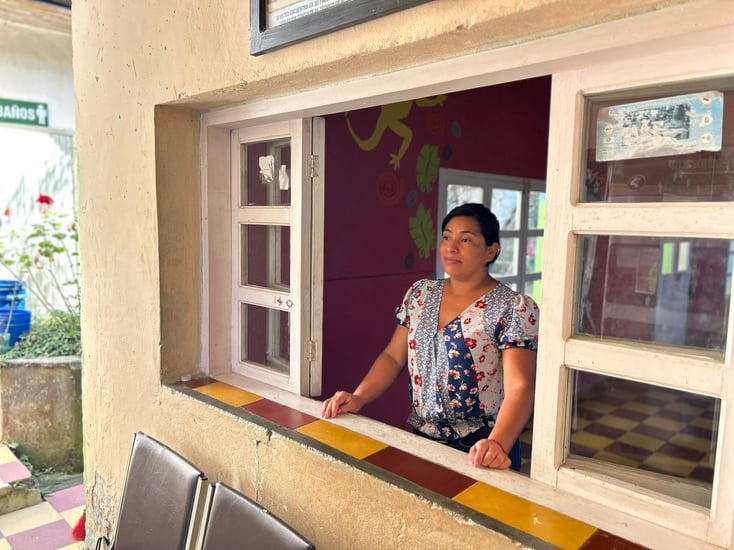
For 2026, the United Nations have declared this year to be the International Year of the Woman Farmer. For us at Sustainable Harvest, every year is the year of the Woman Farmer! Nonetheless, we decided to kick off the year with a shout-out to COMUCAP (Asociación Coordinadora de Mujeres Campesinas de La Paz/Coordinating Association for the Rural Women of La Paz), one of our producer partner groups in Honduras, who have been building something far bigger than just coffee for more than three decades.
In 1993, seven women started a radio program, created to speak openly about domestic violence and women’s rights. Now, more than 30 years later, this program has grown into a women-led cooperative that supports more than 500 members across Honduras’s Marcala region.
Supporting women is the heart and soul of COMUCAP. Long before coffee production became part of the picture, the organization was focused on education, safety, and economic independence for women facing violence and inequality in their communities. Coffee later became a tool that allowed women to generate income, access land, and build long-term stability for themselves and their families.
In this Q&A, Marina Hernández, COMUCAP’s manager, shares the story of how the organization grew from a grassroots initiative into a certified organic coffee exporter while operating a women’s shelter and a wide range of social programs.
________________________________________________
Sustainable Harvest (SH): Marina, we already know COMUCAP and deeply admire the work you do with women. We've shared some of your story before, but for those who may be learning about COMUCAP for the first time, could you start by telling us what COMUCAP is and how it began?
Marina Hernández (MH): COMUCAP was born in 1993 through a radio program focused on defending women’s rights. The initiative began with seven women who used the radio to talk openly about issues affecting women in our communities, self-esteem, domestic violence, and family abuse, which were very common at the time.
Back then, communication was limited, so women would send anonymous letters to the radio station, sharing what they were experiencing in their homes. Those letters made it clear that many women were living with violence and felt completely alone.
The radio program lasted about seven years. From there, COMUCAP took the next step and began forming grassroots groups in the municipalities where violence against women was most prevalent.
Through a baseline assessment, we identified that one of the main reasons women remained in abusive situations was economic dependence. Women didn’t have income of their own, didn’t attend community meetings, and were afraid to take on leadership roles. Those spaces were traditionally reserved for men.
Organizing changed that. Women began affiliating with these grassroots groups, starting in Marcala and Chinacla, and later expanding to other municipalities, where we still have active base groups today.
SH: What kind of work did you start doing within those grassroots groups?
MH: We started with education and awareness, especially around self-esteem. Many women had extremely low self-worth. They were taught to prioritize everyone else but themselves, and they didn’t feel valued.
We partnered early on with Visitación Padilla, an organization that became a key ally. With their support, we provided self-esteem training and addressed high illiteracy rates through a radio-based education program called “Educando con la Radio” (Educating by Radio.) Many of our members learned to read and write through that program.
We also began receiving reports of violence and started accompanying women through legal processes. Many were afraid to file complaints because cases were often ignored or abandoned. With organizational support, women no longer faced that process alone.
SH: When did productivity and income-generating activities, like coffee, enter the picture?
MH: That came later. As we supported women through legal and social processes, we realized economic independence was essential.
We began with collective land, about one hectare, where women learned to grow coffee. At the same time, we explored other productive activities so women could generate income and build collective funds.
We started by producing organic fertilizers and establishing nurseries. Later, we experimented with aloe vera planted among coffee trees as a living barrier to prevent soil erosion.
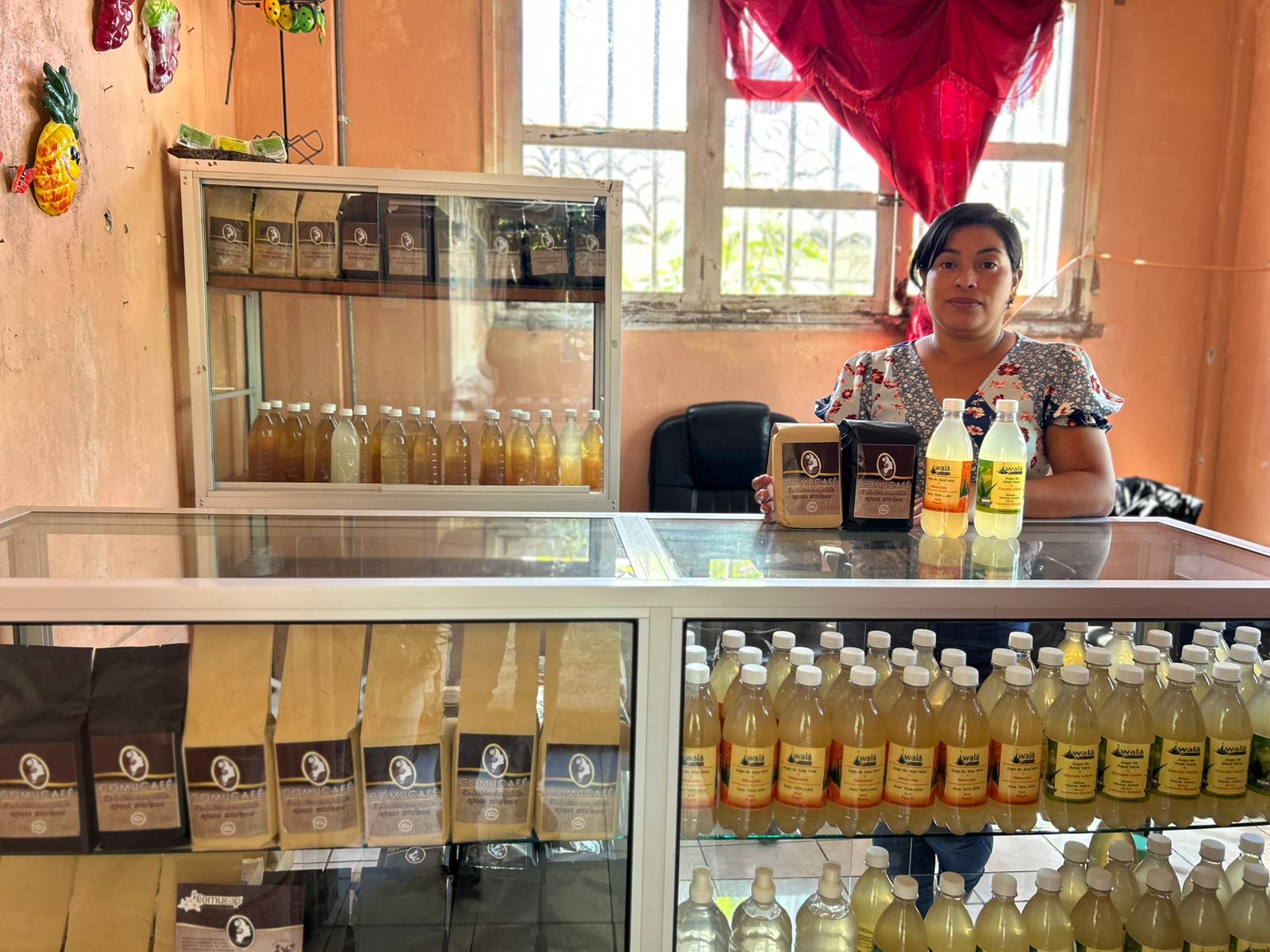
Interestingly, aloe turned out to be more productive than coffee in that trial! With support from some German cooperation partners, we developed aloe-based products like juice, pure gel, soaps, and shampoo.
SH: Access to land and financing can be especially challenging for women. How did members manage that?
MH: It was very difficult. Banks didn’t trust women with credit. There was a belief that women would misuse loans.
Through a land access project, COMUCAP acted as a guarantor so women could access credit and acquire their own plots. Later, we also advocated for women to receive land ownership directly from their partners, since inheritance traditionally favored men.
By 2005, women not only had collective land but also individual plots of their own.
SH: How many women are part of COMUCAP today, and what does coffee look like now?
MH: Today we have 502 members, and 189 of them are coffee producers.
COMUCAP was the first organization in Marcala to export organic coffee with denomination of origin. That was over 20 years ago. Today, COMUCAP is a fully established coffee exporter.
SH: Beyond coffee, what other economic activities are members involved in?
MH: We continue working with aloe and honey. Some groups produce soaps and shampoos; others roast and sell coffee locally. Many groups also manage their own rural savings funds.
We also support a wide range of women-led and youth-led enterprises, sewing groups that produce school uniforms, strawberry production, chili farming, honey, wine made from fruit and vegetables, pig and poultry farming, and small snack businesses.
SH: Let's talk about the shelter. How did the women’s refuge come about?
MH: Receiving violence reports began in 1998. Women would come to us with their children because they had nowhere else to go, sometimes fleeing their homes in the middle of the night.
We adapted two rooms in our office to provide temporary shelter. Later, prosecutors began referring women directly to us because there were no adequate protection services.
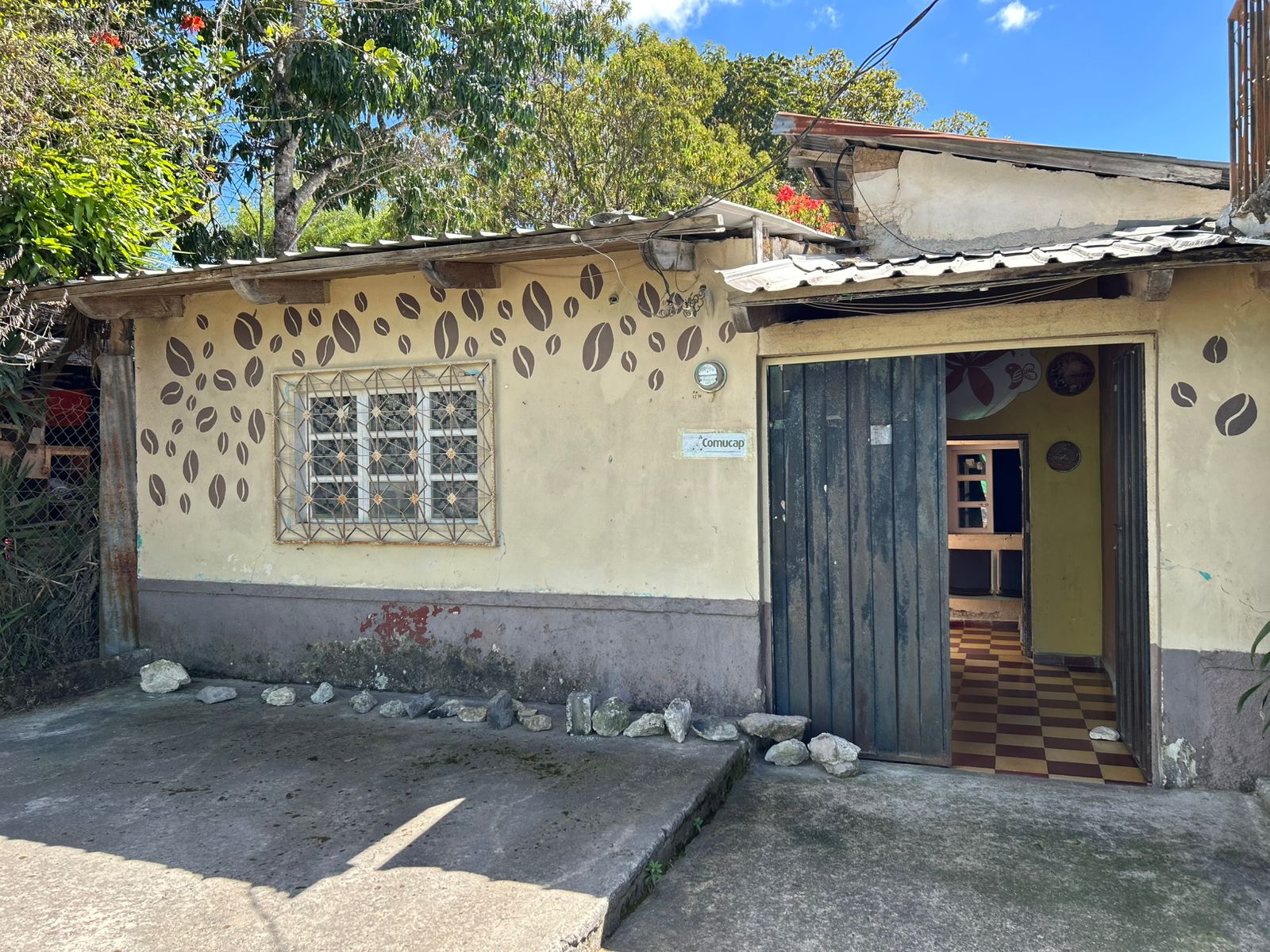
Today, we have a small one-story shelter with two big bedrooms and a kitchen, but it’s in poor condition. We’re currently working toward building a two-story refuge with safer, more dignified facilities.
SH: How long do women typically stay at the shelter?
MH: They stay until the legal process advances, until restraining orders are issued, or decisions are made by the courts. Some women reconcile under legal measures; others choose to become single mothers. We support them through every outcome.
SH: Do you also provide psychological and legal support?
MH: We work closely with public defenders, the prosecutor’s office, and allied organizations. We don’t have in-house psychologists, but through partnerships, like Calidad de Vida in Tegucigalpa, we can provide psychological care and relocate women in high-risk cases.
SH: What projects would you like to implement next at the shelter?
MH: Our priority is full remodeling and equipment – beds, kitchen supplies, furniture, and secure spaces. We also want to create a youth office and a proper children’s area.
Another project we’re planning is a community laundry. Women identified washing clothes by hand as one of the most time-consuming tasks, sometimes up to six hours per day. A shared laundry would save time and reduce physical strain.
SH: Finally, what message would you like to share with the roasters and consumers who buy COMUCAP coffee?
MH: First, deep gratitude. Every pound of coffee purchased carries the story of women who have survived violence and built new lives.
Coffee sales help send children – sons and daughters of members – to university, something that was impossible before. They support women when they need it most and strengthen our organization.
Producing coffee in the mountains is hard, costly work. Knowing that our coffee is valued gives meaning to that effort.
We are deeply grateful to Sustainable Harvest and all buyers who believe in COMUCAP. Your support reaches the women directly, where it’s needed most.

.png "SH Logo")