Harvest season is well underway across East Africa, though no two origins are telling quite the same story. Rwanda is nearing the finish line, Uganda's Robusta harvest is running later than usual, and Tanzania's crop is only just getting started. We checked in with our colleagues on Sucafina's teams on the ground in Rwanda, Uganda and Tanzania, and this time around, we also heard directly from two of our cooperative partners in Rwanda about how the season has felt from their side.
Here’s a quick rundown of what they shared with us:
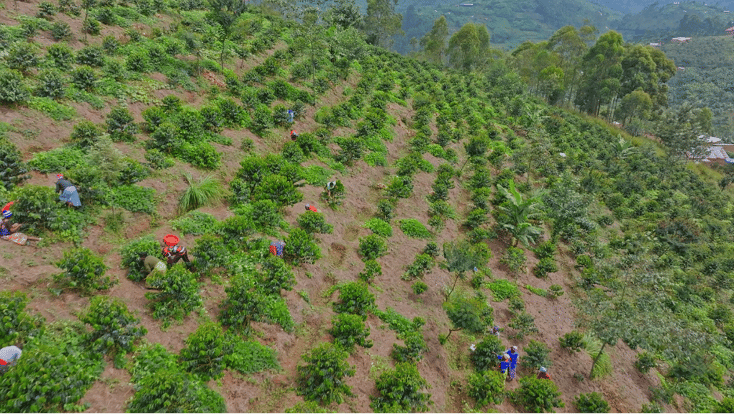
- Rwanda's harvest is almost complete and running below last year's volumes, but quality has held strong, and our cooperative partners are already preparing the first shipments.
- Uganda's main Robusta harvest is running 4–6 weeks later than usual, tightening nearby supply even though full-season volumes still look broadly stable.
- Tanzania's harvest hasn't fully kicked off yet, but early signs point to slightly higher Arabica and Robusta volumes than last year.
Rwanda
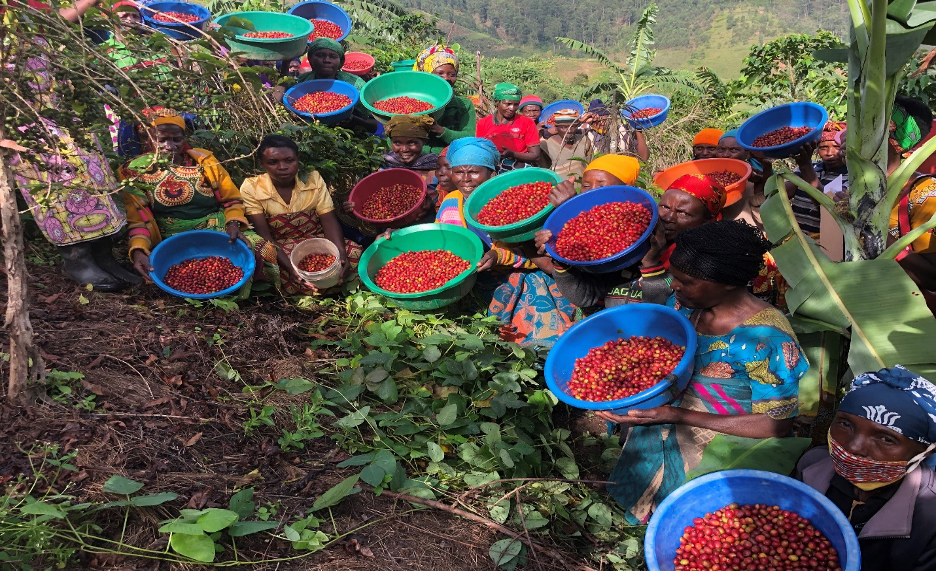
Rwanda's harvest is now around 88% complete, and the team is expecting overall production to land roughly 35% below last year. The main culprit was poor flowering earlier in the season, made worse by a reduction in the government's fertilizer subsidy, which left some producers with less access to the inputs they needed.
Less coffee on the trees has meant more competition for cherry, and prices have climbed sharply as a result. Even so, quality has held up. "Quality has remained consistently strong throughout the season, which is encouraging as the harvest nears completion," says Alain Fabrice Uwayo Baraka, Commercial Manager.
Rising fuel prices have added another layer of cost pressure, pushing up transportation and processing expenses and, in turn, the overall cost of getting coffee through the supply chain.
We also heard directly from two of our cooperative partners about how the season has unfolded on their end.
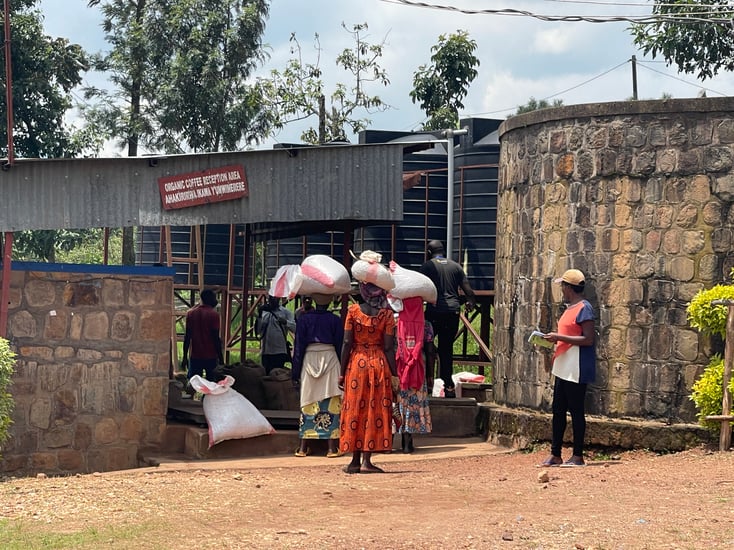
At Abakundakawa Cooperative, the harvest is approaching its later stages. "We are almost at 65% of harvest. We are also starting to process the parchment, two containers are ready to be shipped," shares Antoine Kagenza.
At Nyampinga Cooperative, the focus has been on holding the line on quality even as the market is volatile. "The 2026 harvest has delivered promising quality at Nyampinga Cooperative, reflecting the dedication and hard work of our farmers throughout the season. While this harvest was characterized by significant price fluctuations and unusually high cherry prices, which encouraged some producers to prioritize short-term gains over quality, our farmers remained committed to producing exceptional coffee. Their resilience and dedication have resulted in coffees that truly showcase the unique potential of our region. At Nyampinga Cooperative, our focus has remained on quality, transparency, and supporting our farming communities. We are proud of the coffees produced this year and look forward to sharing them with partners who value both outstanding quality and sustainable impact," shares Arthur Shema, MD of Nyampinga.
On the certification side, the Rwanda team is currently renewing Rainforest Alliance and Organic certifications, alongside IMPACT verification. "This will ensure the continued availability of certified and verified coffees, giving buyers confidence in the traceability and sustainability of our sourcing," says Celine Niwemugeni, Sustainability Manager.
Uganda
Uganda's main Robusta harvest is underway, but it's arriving later than usual. Early pickings started in June, the flow has been slow, and the harvest peak isn't expected until late July or August. That delay is tightening nearby supply, particularly for June and July shipment positions.
Even so, total Robusta volumes are projected to land broadly in line with last season at around 3.9 million bags of FAQ. There's one thing worth watching: early reports out of Greater Masaka point to localized reductions of 5–10%, which the team is keeping an eye on. Quality, for what it's worth, remains consistent with last year.
So what's behind the delay? "The delayed start is largely weather-related," explains Raymond Mugisha Muhwezi, Research Data Analyst. "Frequent rainfall in the central region ahead of the harvest has slowed cherry ripening and reduced early harvesting activity." A recent correction in the London futures market hasn't helped either, with some farmers and traders choosing to hold stock while they wait for better prices.
It's currently off-season for Arabica cherry, so there isn't much to report there yet. "Semi-washed availability is still tight and differentials remain firm. The new crop looks promising, but we expect to have a clearer picture from mid-July," says Loic Dugast, Arabica Supply Chain Coordinator.
Tanzania
Tanzania's harvest hasn't fully started, but it's not far off. Expect it to begin gradually from the end of June, pick up through July, peak in August, and wrap up by October.
"At this early stage, both Arabica and Robusta crop volumes are looking slightly higher than last year, thanks to favorable weather and new plantations coming into production across the country," shares Kihara Victor, Commercial Manager.
This month also marks a small milestone: the one-year anniversary of Kyejus Mill in Mbinga, a facility partially financed by Sucafina and operated by longtime partner Kyejus. "After a successful first season, we are looking forward to building on that partnership. This dedicated mill enables us to source parchment directly from farmers and maintain greater quality control from farmgate to FOB," says Kihara.
On the sustainability front, the AMCOS (Agricultural Marketing Cooperative Society) loyalty program has grown, and the team is now working with 15 AMCOS. Run in partnership with TechnoServe, the program supports improvements in yield, quality and farming practices across Tanzania's Southern Highlands. IMPACT re-verification, alongside Rainforest Alliance and C.A.F.E. Practices verification, is also expected to be completed in 2026.
To learn about our East Africa offers, reach out to your Relationship Coffee Manager!

.png "SH Logo")