Over twenty years ago, before becoming what it is today, SOPPEXCCA was going through a challenging period and working to rebuild trust within Nicaragua’s coffee sector. This led to a stronger cooperative and a groundbreaking gender policy that transformed the organization from the inside.
In this Q&A, Fátima Ismael, SOPPEXCCA’s General Manager, talks about how the cooperative began, how the “Las Hermanas”(The Sisters) program started and grew, and how relationships, sustainability, and women’s leadership guide the organization today.
________________________________________________
Sustainable Harvest (SH): Fátima, we've been working together for over 20 years, but we are not sure if we know the full story of how SOPPEXCCA started. Can you share the story with us?
Fátima Ismael (FI): SOPPEXCCA was born from a very difficult situation. In 1997, a cooperative in Jinotega collapsed due to administrative problems, leaving a debt of more than USD 800,000 owed to six European importers. At that time, buyers provided pre-financing directly, and the coffee was never delivered, nor the funds repaid.
The crisis affected producers and buyers alike. A new company, SOPPEXCCA S.A., was formed with participation from some producers and the importers, but it began with debt as its only capital.
In 1999, I was asked by two European industry members to take over management and determine whether the organization could be saved or needed to close. We started with no office, no resources, and very little credibility. We negotiated a 25-year repayment plan and slowly began rebuilding. Through tremendous effort, we repaid the debt in just six years.
Later, we changed from a private company to a Union of Agricultural Cooperatives (UCA SOPPEXCCA) because the private-corporate model did not fit the needs of small farmers. The cooperative model gives everyone a fair share, a voice, and shared ownership. This change started around 2002 and 2003.
SH: SOPPEXCCA is known for its strong gender focus. How did that begin?
FI: We were the first cooperative in Nicaragua to have a formal gender policy. We started with discussion groups for both men and women, focusing on strengthening the long-term stability of producers and their families. We asked simple but important questions: If a man owns the land and something happens to him, can his wife legally manage the farm? That conversation led many men to transfer land ownership to their wives, and that’s how women started becoming members.
Historically, [in Nicaragua] women have had very limited access to land and the means of production. Securing land ownership was a major step toward empowerment.
As women started managing their own land, we began tasting their coffee separately. We saw a clear difference in quality – the women’s coffee always stood out! This discovery led to even bigger changes.
SH: Is that how Las Hermanas was created?
FI: Yes! Around 2001, Jorge Cuevas and the Sustainable Harvest team cupped our women’s coffee and supported the idea of creating a differentiated brand. Sustainable Harvest’s founder later championed the initiative, and early roasters like Cafe Moto and Peet’s Coffee took the risk of positioning the brand.
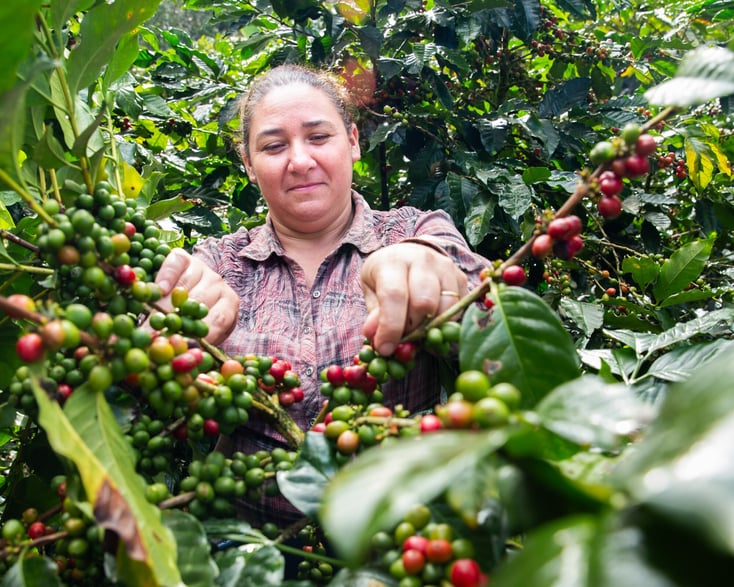
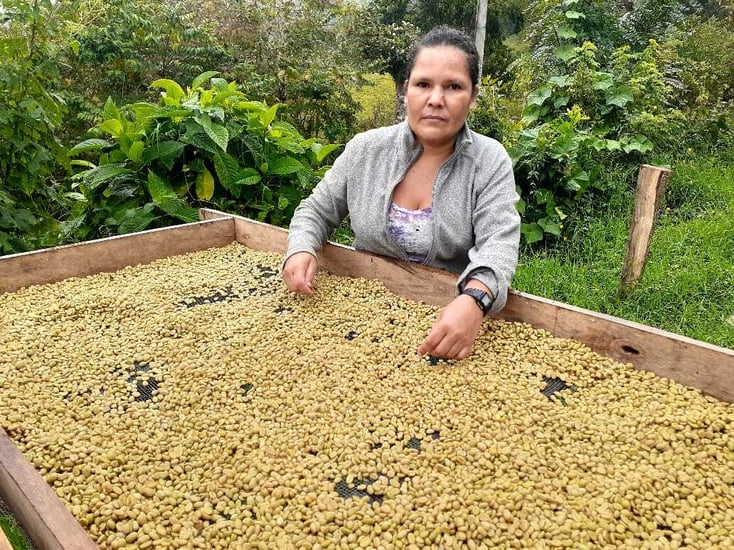
We began with just one container and 18 women. Now, 135 women own land, run their farms, and produce coffee as part of Las Hermanas.
SH: How has the program evolved over the last 20 years?
FI: The evolution has happened internally and externally.
Inside the cooperative, the number of women has grown a lot. Some who used to produce only 12 to 15 quintals now produce hundreds. Many women have grown their farms, improved their facilities, and made their families more financially secure.
Outside our organization, our gender policy became a model for others. After four years, we shared it with 35 other cooperatives in Nicaragua. We were also the first in the country to promote a coffee brand made by women. Now, many more brands highlight women producers.
We also track our social impact. For example, we have a zero femicide rate within our organization, which is rare in our country. We take this very seriously and monitor it closely.
SH: What kinds of programs are you currently implementing for women and families?
FI: We are working in several areas. This year, we are making our food security program stronger and starting a breast cancer prevention campaign that focuses on awareness, education, and medical check-ups.
Women follow clear guidelines for how to use quality premiums. We track these investments to make sure the money goes to real needs, like improving productivity, building infrastructure, or supporting families, instead of being spread too thin.
We are also working to make wet milling more efficient so we can increase both yield and quality.
Water management is another top priority for us this year. We are focusing on three main areas:
- Protecting and reforesting water sources;
- Reducing water use at the household and farm level;
- Proper treatment of wastewater from coffee processing.
In the past few years, we have also started entrepreneurship funds for members’ daughters. Young women can get small loans to start businesses like shops, raising animals, or poultry farming. It is important to have different sources of income because families [farming on small plots] cannot rely only on coffee.
SH: What does the future hold for SOPPEXCCA?
FI: We do not aim to grow massively in volume. We only sell coffee from our members, who now number 405 producers. Some have left because we maintain strict environmental rules, like not using glyphosate. We care more about integrity and sustainability than growing quickly. Our focus is on traceability and zero deforestation, strengthening sustainable production, advancing carbon capture initiatives, beginning carbon footprint measurement and supporting generational renewal, especially young women.
Today, 42 of our 135 women members hold leadership positions within their cooperatives. Elections are democratic and transparent.
We want to grow together with our members’ families. We hope the next generation, especially young women, will see coffee as a respectful and sustainable future.
__________________________________________
If you're interested in purchasing coffee from SOPPEXCCA or supporting any of the projects they are working on with women in their community, don't hesitate to reach out! Send us an email at - trade@sustainableharvest.com

.png "SH Logo")