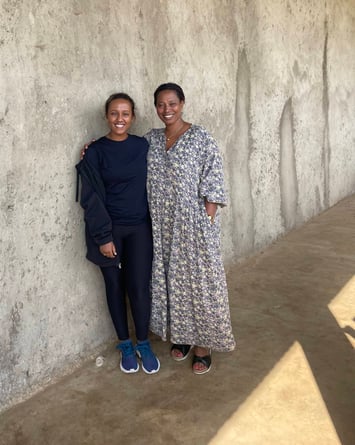
2026 has been named the Year of the Woman Farmer, and we’re excited to celebrate by shining a spotlight on some of the incredible women-led producer partners we work with. Through the series of Q&A’s featuring women producers*, we hope to help fund important social projects at origin and bring more attention to the unique challenges women in coffee face. For this edition, we had the pleasure of sitting down with Mahder Birhanu of Dumerso Coffee in Ethiopia.
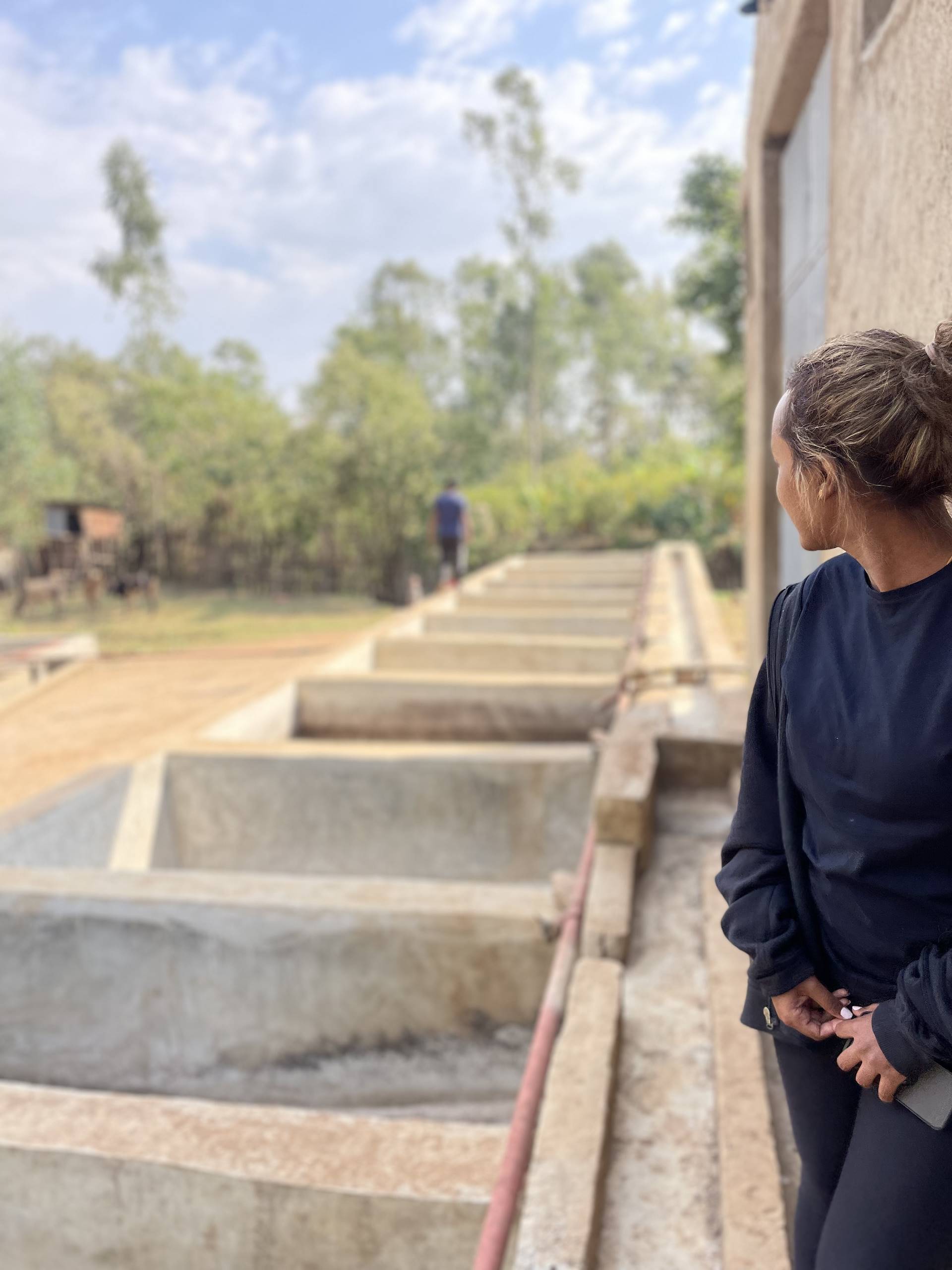
The Dumerso washing station in Yirgacheffe has a story worth telling. Built in 1998, it lay dormant for over a decade until sisters Mahder and Hirut revived it in 2013. Since then, they have focused on producing exceptional coffees.
________________________________________________
Sustainable Harvest (SH): Could you briefly explain how you and your sisters started Dumerso and what the driving factor was in forming your company?
Mahder Birhanu (MB): Dumerso was established in 2014, but my family had been working in the coffee sector for many years prior to that. So, it’s always been a passion for my sisters and me. Once I graduated from school, I thought, “Why don’t we get our own export license and export our coffee?”
Back then, there weren’t many coffee exporters in Ethiopia, and it was hard for us to reach the market or get a fair price for our coffee. That’s why we got our export license and bought the Dumerso site in Yirgacheffe.
SH: Can you share a breakdown or estimate the ratio of women to men who work with Dumerso? And as far as the farmers you work with, how many are women?
MB: During harvest season, from October to January, most of our employees are women – about 90% – men usually take on the night shifts and some of the heavier work. In our office, we have 70 permanent staff, and many of them are women too.
Out of our 232 registered farmers, 57 are women. This year, we added 841 new farmers, but I don’t yet know the breakdown for this new group.
SH: Do you currently separate the women-grown lots?
MB: Not at the moment, but clients have asked if we plan to separate those lots. Since we are women-owned and operated, it makes sense, and we hope to do this in the future.
SH: You’ve mentioned that there’s a plan for a childcare center at Dumerso. Can you tell us more about that?
MB: We started planning this new project about a year ago. My sister has always dreamed of having a childcare center at our facility, since many of our team members are women. With childcare on site, they won’t have to worry about leaving their children at home or missing work.
The project is expected to take 18 months, but with more support, we could finish sooner.
SH: Are there any other outlets outside of coffee where income could be generated for the women of Dumerso?
MB: We’re working on a plan for the off-season. If we set up a coffee program, we could teach women to make handmade items at home, which we could then sell at our coffee shop in Addis.
SH: And outside of finding safe and dependable childcare during the harvest season, what are some of the biggest hurdles you see for women farmers that work with Dumerso?
MB: Coffee is the main source of income, but it’s seasonal, which is a challenge. They work for only four months, but need to support themselves all year. That’s why we’re planning projects to help them earn income outside of coffee. When we open the childcare center, we’ll also hire a few women to work there, which will help. It’s a step-by-step process.
For me, as a woman in business, my biggest challenge is getting financing approved. But for women in Gatifi, I can’t even imagine all the difficulties they face at home. It’s part of their daily lives. Hopefully, for now, this project will help them.
Finding appropriate childcare can be challenging no matter where you are, and oftentimes women are left with the impossible decision of declining work to care for children while also needing to generate income to support their families. The stakes are even higher being a smallholder farmer whose livelihood is directly dependent on a seasonal crop.
SH: Is there anything else you want the buyers of this coffee to know and understand about the coffee, about Dumerso, about the women in Yirgacheffe?
MB: I always say that visiting Yirgacheffe or any coffee-growing area will change your perspective. If you get the chance to visit, I encourage it. I want people to learn more about where their coffee truly comes from.
________________________________________________
As we celebrate the Year of the Woman Farmer, we’re excited to share that two Dumerso Trading coffees grown by Mahder’s sister, Hirut, will be landing this summer! Talk to your Relationship Coffee Manager to find out how buying these exceptional Ethiopian coffees can help support the new childcare center project.
Alongside these arrivals, we invite you to help support Dumerso’s childcare center project, an initiative designed to provide safe, reliable care for the children of the women who power the harvest each year. Contributions will go directly toward construction and setup costs, and roasters interested in participating can reach out to our team to learn how to allocate funds alongside their coffee purchases.
The center will be about 1,300 square feet, with workspaces and study and play areas for the children of women working at Dumerso. So far, about $15,000 has been raised toward the $58,000 budget. A key amount is still needed to start construction.
Through the PAE Program, Sustainable Harvest shares profits and matches up to $50,000 in roaster contributions from green coffee sales each year. These funds support social and environmental projects across our supply network. This year, we’re focusing on providing extra support to women’s groups to address gender-specific challenges in the coffee sector.
Together, this is an opportunity to celebrate incredible coffees while investing in the long-term wellbeing of the community behind them.
*If you want to read our other recent blog posts featuring women producers, you can check them out here:
- Coffee as a Tool for Independence and Women Empowerment: a Q&A with COMUCAP
- Women, Quality, and Long-Term Relationships: The Journey of SOPPEXCCA with Fatima Ismael
- ASPRASAR and the Women Leading Coffee Production in Southern Tolima
- Coya Coffee Women's Harvest – An Initiative Forged by the Women of Rutas del Inca

.png "SH Logo")